Al-Safaa Academy
View live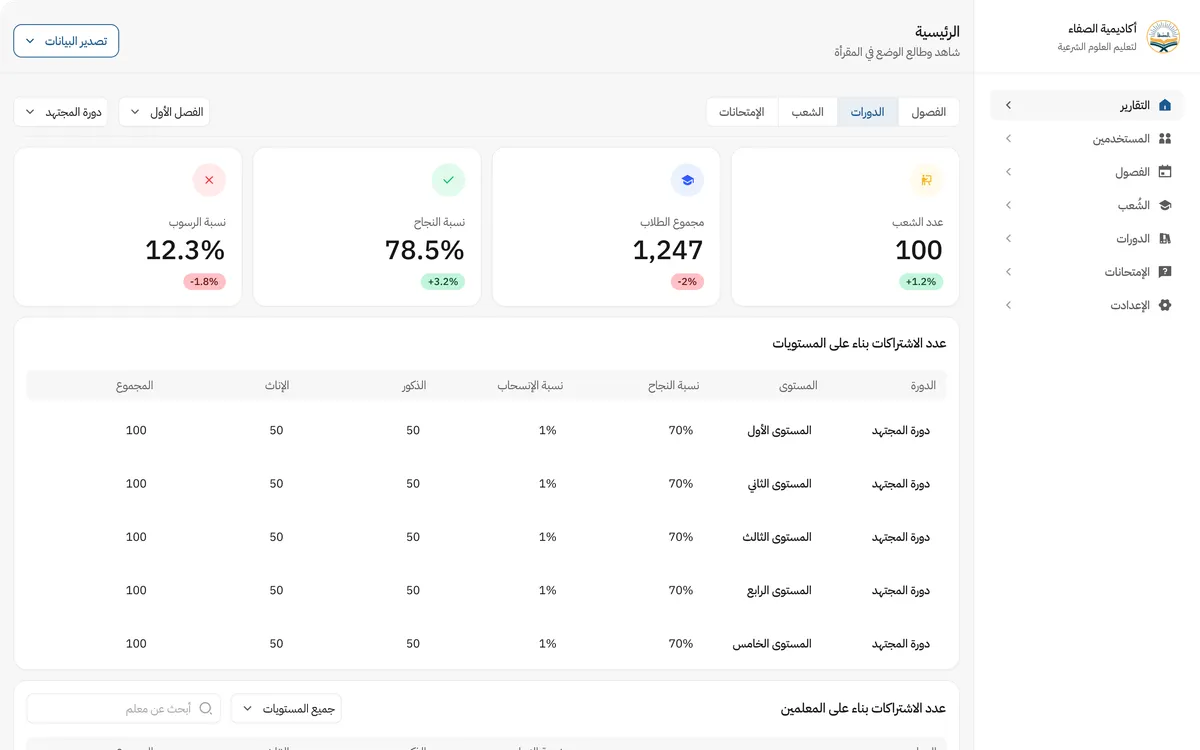
Al-Safaa Academy runs Quran memorization courses: semesters, levels, classes, teachers, students, exams, attendance. All of it ran on a platform with no information architecture. Not a weak one. None.
The complaints arrived as separate problems. Settings nobody used. Data with no hierarchy. Records that didn’t connect. Publishing one course took a dozen actions. Same root cause every time: nothing was organized around what the work actually is.
I was the sole designer. This covers the web platform.
Structure first
I mapped the system to the entities that run it, then made every screen answer to that structure. Once semesters, courses, levels, classes and exams were named and related properly, most of the interface problems stopped being interface problems.

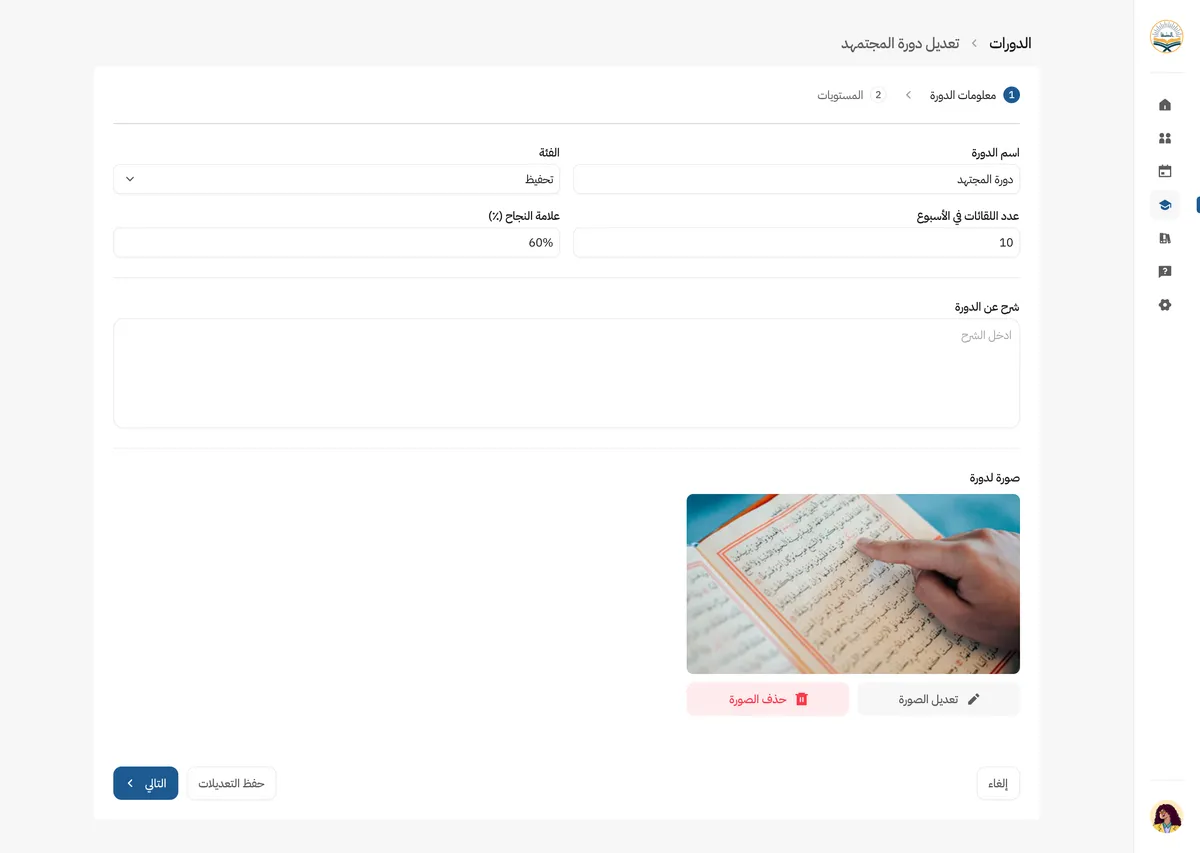
Course creation went from a dozen scattered actions to two steps: course details, then levels. Content and questions attach to a level instead of floating loose. Drafts save.
Reports that answer a question
The old platform showed data. It didn’t answer anything. The new reports open on pass rate, failure rate, total students and section count, then break enrollment down by level and by teacher, filtered by semester and course, exportable.
Arabic first, not Arabic later
The interface is Arabic. I took Align UI as a base kit and rebuilt it for RTL rather than mirroring it: layout direction, table alignment, form and stepper order, iconography, and Western numerals inside Arabic text so figures stay scannable.
Outcome
By the teachers’ own account, managing course content, students and attendance is close to 80% faster than the platform it replaced.